
Meta's $6.6B research tax credits questioned amid massive AI data center buildout

Meta's rapidly expanding AI infrastructure programme is drawing congressional scrutiny over whether expenses associated with the design, construction and operation of highly specialised data centers should qualify for federal research tax credits.
The company reported approximately $6.6 billion in federal research credits between 2023 and 2025, increasing from around $700 million in 2023 to about $2 billion in 2024 and nearly $4 billion in 2025. It is not publicly known how much of that total, if any, relates specifically to data center development, which is now one of the main questions lawmakers are asking the company to clarify.
The issue centres on the increasingly blurred boundary between experimental engineering and conventional capital construction. Research credits are generally intended for activities involving technological uncertainty and a process of experimentation. AI data centers, however, are becoming significantly more complex than conventional facilities as rapidly increasing computing densities drive new approaches to cooling, electrical distribution, power generation and mechanical integration.
Meta argues that some of its AI-optimised infrastructure involves first-of-kind engineering that requires extensive real-world testing and cannot always be resolved through simulation alone. Lawmakers are questioning where that experimentation ends and the construction of permanent buildings, electrical systems, cooling infrastructure and other long-life assets begins.
The scale of Meta's current construction programme makes that distinction particularly significant. Its Hyperion AI campus in Richland Parish, Louisiana, has developed into an approximately $27 billion project incorporating around 4 million sq ft of buildings together with extensive power, cooling and connectivity infrastructure. The campus could eventually require as much as 5 GW of electricity and is expected to support more than 5,000 workers during peak construction.
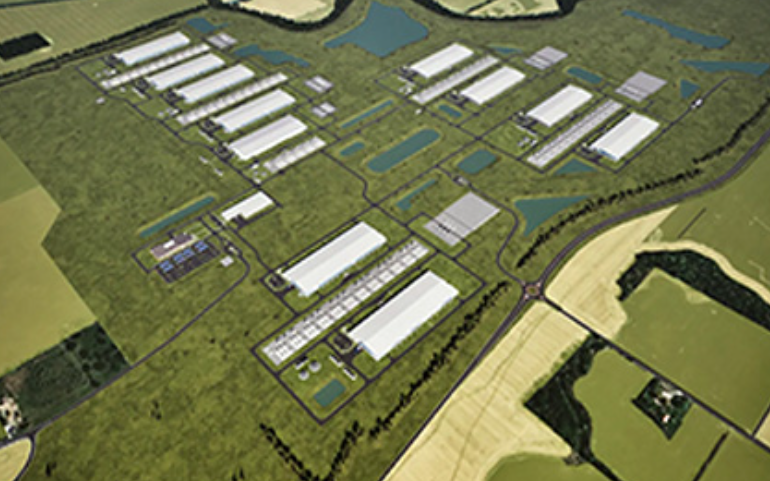
Meta is also developing a more than $10 billion, 1 GW campus in Lebanon, Indiana, while another 1 GW development in El Paso is associated with approximately $14 billion of investment in buildings and supporting infrastructure. Across the wider programme, Meta expects AI infrastructure expenditure in 2026 to reach as much as $145 billion.
The tax question therefore has implications well beyond individual data center buildings. Modern AI campuses increasingly resemble integrated infrastructure systems, combining computing halls with substations, high-capacity electrical networks, advanced cooling systems, backup generation, telecommunications infrastructure and, in some cases, dedicated energy facilities.
Congressional inquiries are now seeking more detailed information on which AI data center expenditures Meta considers eligible, how those costs were classified and whether professional legal or accounting opinions supported that interpretation. The company has been given until October 31 to provide additional information.
No determination has been made that Meta's claims were improper, and the amount of research credits associated specifically with data center construction remains unknown. The scrutiny nevertheless raises a broader question likely to become increasingly relevant as AI infrastructure evolves: when a facility incorporates technologies and systems that have never previously been built at that scale, how should experimental engineering be separated from the permanent infrastructure required to make it work?
Sources: www.enr.com, constructorsjournal.com/
Want to read more like this story?

From AI to infrastructure: Construction’s expanding role in data centers
Jan, 28, 2026 | NewsData center construction emerged as one of the strongest sectors in an otherwise uneven constructio...

Building the Digital Highway: Meta’s 50,000km Subsea Cable
Feb, 26, 2025 | NewsMeta has announced its most ambitious subsea infrastructure project yet—Project Waterworth, a 50,00...

First-of-its-kind public Nevada data center halted over review concerns
Sep, 08, 2026 | NewsApproval for a planned 167 MW data center near Boulder City, Nevada, has been temporarily halted aft...

US and UAE Finalize Strategic AI Infrastructure Deal
May, 21, 2025 | NewsThe United Arab Emirates and the United States have formally unveiled plans for the world’s largest...

Digital Twin Infrastructure: Building Safer Bridges with AI
Aug, 20, 2025 | NewsArtificial intelligence is emerging as a powerful tool to improve the safety and resilience of brid...

Facebook to invest $2 billion for data center expansion in Oregon
Oct, 03, 2018 | NewsFacebook will soon provide an additional $750 million, reaching a total investment of $2 billion in...

Satellite data and AI drive the next wave of sustainable infrastructure in the UK
Oct, 03, 2025 | NewsThe United Kingdom is advancing the integration of satellite data and artificial intelligence (AI...

Data-Driven Construction: The Key to Meeting Global Infrastructure Demands
Feb, 14, 2025 | NewsAs the global population is set to reach 9.7 billion by 2050, the demand for new and upgraded infra...

China’s underwater data center project targets 90 % cooling energy reduction
Oct, 30, 2025 | NewsA Chinese maritime-equipment company, Highlander, is preparing to deploy a submerged data center po...
Trending

Taipei 101’s impressive tuned mass damper

Characteristics of Load Bearing Masonry Construction

Understanding the Carola Bridge Collapse: Expert Insights

This powder offers an innovative solution to water purification

Dutch greenhouses have revolutionized modern farming

Formwork failure causes roof slab collapse in Limassol construction site

